
Most of us were taught to think about learning in a straight line.
- You start at the beginning.
- You move forward.
- You finish a topic.
- Then you move on.
If you don’t keep up, you fall behind. If you need to revisit something, it feels like going backward.
That model is so familiar that it feels like reality. But it’s not how learning actually works.
The Problem With the Line
In a linear model of learning:
- knowledge is something you “cover”
- progress is measured by moving forward
- once something is done, it’s considered complete
But real understanding doesn’t work like that.
You can “learn” something and still not really understand it. You can revisit something later and suddenly see it differently.
That’s not going backward. That’s going deeper.
The Spiral
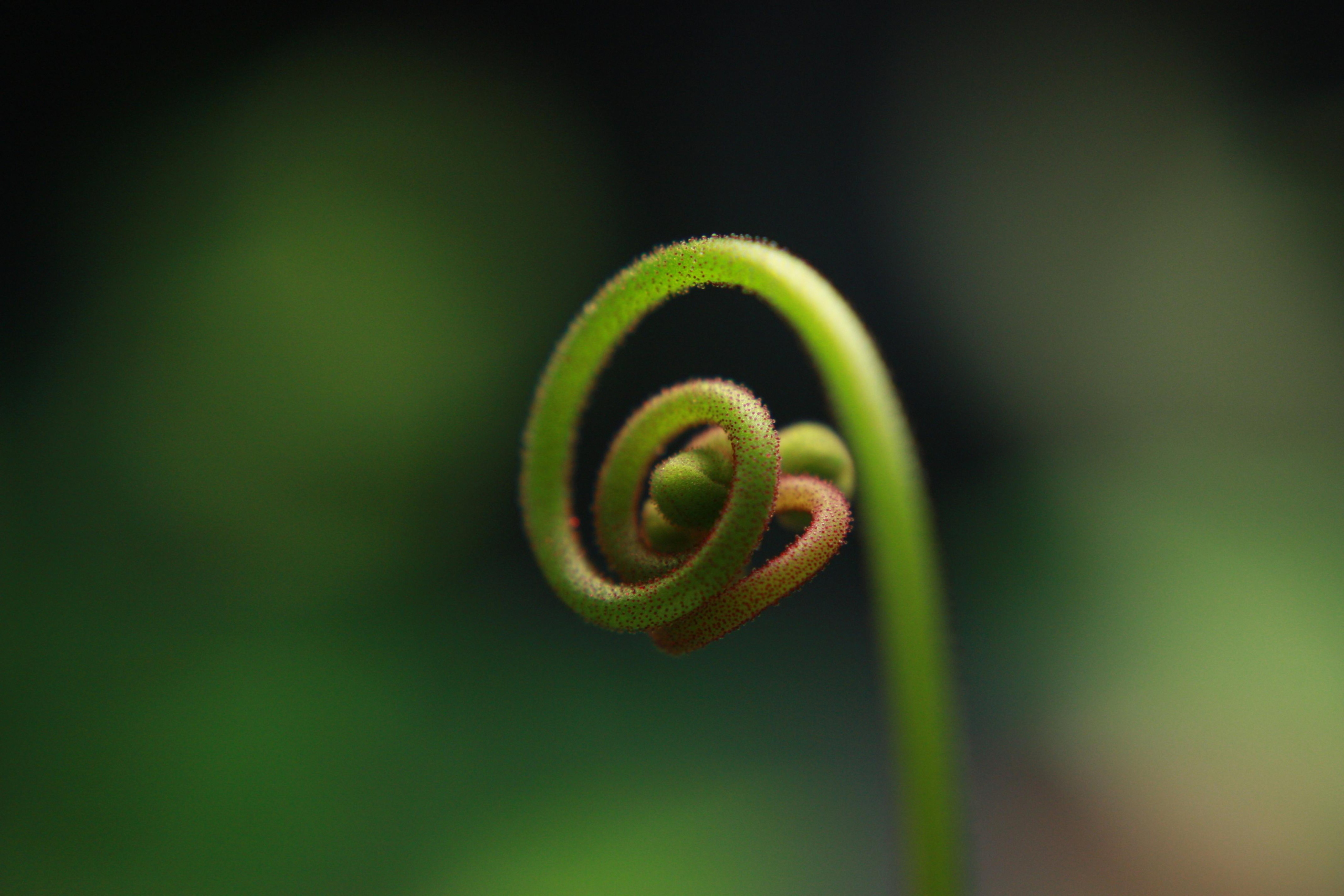
A more accurate way to think about learning is as a spiral. Not a straight line.
A spiral moves forward, but it also returns. You come back to the same idea—but with more awareness, more context, and more experience. Each pass deepens understanding.
→ The Pattern
Learning deepens through cycles, not straight lines.
What Is the OLIR Learning Spiral?
In TODI, we use a simple structure to guide this process:
- Orient → Start with a question or direction
- Learn → Explore, investigate, gather insight
- Integrate → Connect ideas and build understanding
- Reflect → Step back and notice patterns
Then the cycle repeats. But it doesn’t repeat at the same level.
Each time through the spiral:
- the questions get better
- the connections get stronger
- the understanding gets deeper
This Isn’t a New Idea
Long before modern education systems existed, people studied transformation in a different way. Through alchemy.
Not the version of alchemy that tries to turn lead into gold—but the deeper idea behind it:
Inner Transformation.
The alchemical process—often called the magnum opus—was described in stages.
Different traditions name them differently, but a common structure looks like this:
- Nigredo – catharsis
- Albedo – illumination
- Citrinitas – integration
- Rubedo – union
It wasn’t about memorizing information. It was about transformation through cycles.
Where the Spiral Meets Alchemy
There’s a clear resonance between the two.
Without getting overly technical, you can see the pattern:
- Orient → encountering the unknown
- Learn → exploring and making sense of it
- Integrate → connecting and organizing understanding
- Reflect → recognizing patterns and internalizing them
And then: You return.
But not as the same learner. That’s the key.
Learning is not repetition. It’s transformation through return.
Why This Matters for Learning
When learning is treated as a spiral instead of a line:
- revisiting is not failure
- confusion is part of the process
- time spent deepening is not wasted
It becomes clear that: Coverage is not the same as understanding.
A learner can move quickly through topics and retain very little. Or they can cycle through ideas and build something that lasts.
This Aligns With How We Actually Learn
Even outside of any framework, this pattern shows up everywhere.
- You understand something better after you’ve experienced it
- You see connections you missed the first time
- Reflection strengthens memory and insight
Learning naturally happens in cycles of:
- exposure
- exploration
- connection
- reflection
The spiral doesn’t impose a structure. It reveals one that’s already there.
How This Differs From School
Most traditional systems are built around:
- timelines
- checklists
- standardized pacing
The goal is to move forward. Even if understanding is shallow.
In that model:
- falling behind is a problem
- revisiting is inefficient
- depth is secondary to coverage
The spiral flips that.
- depth becomes the goal
- revisiting becomes essential
- time becomes flexible
“But Will My Child Fall Behind?”
This is one of the most common concerns. It makes sense.
If learning is not linear, how do you measure progress?
The answer is: You measure it differently.
Not by:
- how many topics are completed
But by:
- how well something is understood
- how easily connections are made
- how independently a learner can explore
A learner who understands deeply can move faster later. A learner who only skims the surface often has to relearn everything.
The Deeper Structure
There’s another layer to this. Not all parts of the spiral are equal.
Some moments are about choosing direction. Others are about deepening understanding.
You can think of it as:
- an outer movement (where to go next)
- an inner movement (how deeply to go)
Together, they create a living learning process. Not a fixed path.
The Bigger Picture
The OLIR Learning Spiral is not just a method. It’s a way of seeing learning differently.
It recognizes that:
- understanding develops over time
- insight comes from return
- growth is cyclical, not linear
And ultimately: It moves the learner toward something deeper.
Where It Leads
When learners begin to understand their own cycles of learning, something shifts.
They stop asking:
- “What do I have to finish?”
And start asking:
- “What do I want to understand more deeply?”
That’s the beginning of:
- curiosity-driven learning
- independent exploration
- ownership of the process
In other words: Sovereign learning.
Final Thought
Learning was never meant to be a straight path. It was always a process of returning, refining, and deepening.
The spiral doesn’t slow learning down. It makes it real.