
Education is what remains after one has forgotten what one has learned in school.
The only thing that interferes with my learning is my education.
If you want to find the secrets of the universe, think in terms of energy, frequency and vibration.
Within you lies the pattern of the cosmos; discovering it is awakening to your true nature.
The mind becomes wise not by one discipline, but by discovering how all disciplines illuminate one another.
Mental Models
Learning becomes easier when we have good ways to think about complex ideas. These ways of thinking are called mental models.
A mental model is a structured framework that helps us understand how something works. It provides a lens for exploring systems, ideas, and patterns in the world. Instead of approaching every question from scratch, mental models give learners a repeatable method for investigation and understanding.
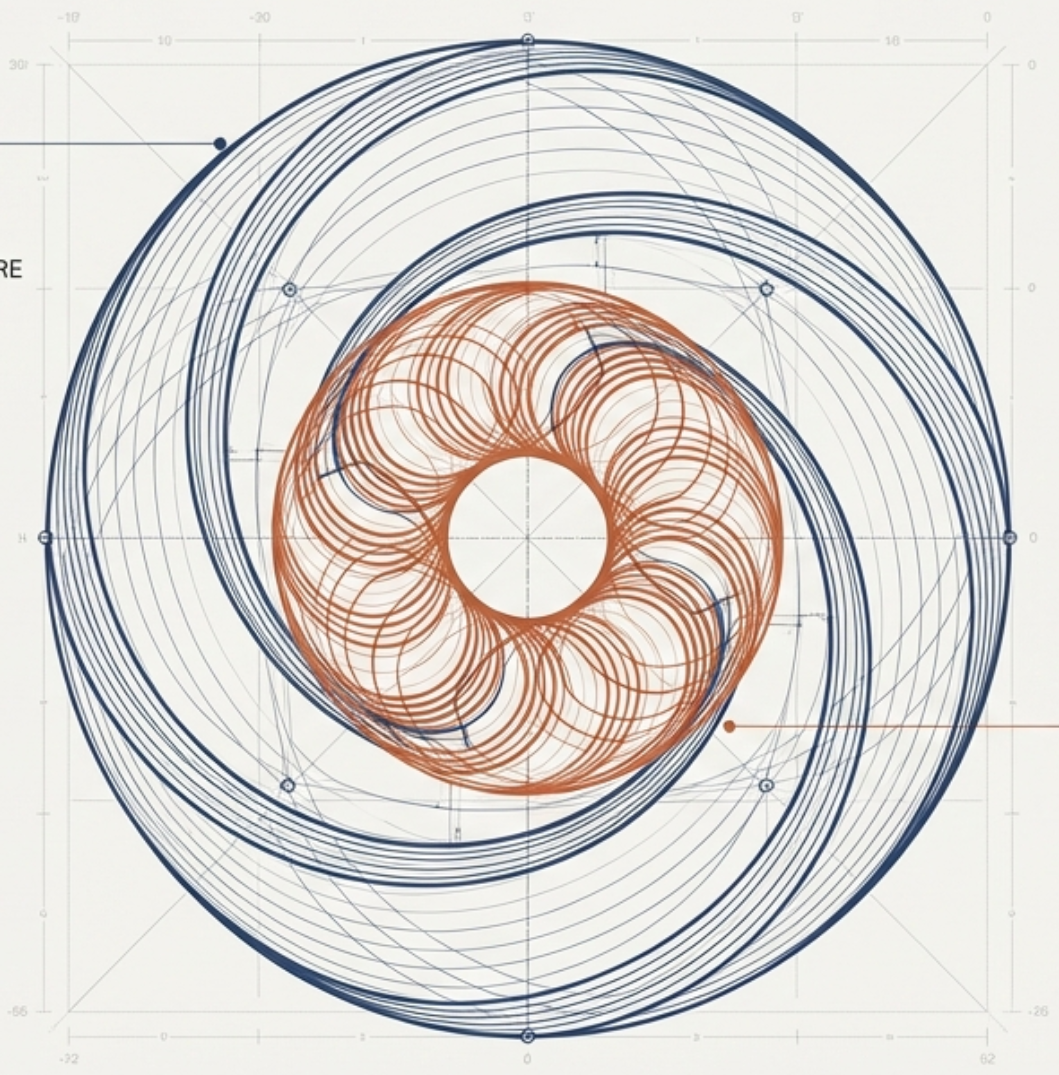
At TODI, mental models serve as the engines of exploration within the Learning Spiral.
Why Mental Models Matter
The world is full of interconnected systems—natural, technological, social, and conceptual. Understanding these systems requires more than memorizing facts.
Mental models help learners:
Over time, learners build a toolkit of mental models that allows them to explore ideas more effectively. Each model becomes another lens through which the world can be understood.
How TODI Mental Models Work
Every mental model used at TODI includes three core elements.
Anchors
Mental models use anchors to orient around what the learner explores throughout TODI Learning Spiral.
Example: Systems Thinking = Keystone System
Tiers
Mental models use pregression tiers to guide learners through stages of deep learning.
Example: Systems Thinking = Tier 1. Explorer
Tools
Mental models include automated tools that help learners navigate the TODI Learning Spiral phases.
Example: Systems Thinking = Keysone System Curator
Building a Toolkit of Thinking
The goal of mental models is not to replace curiosity—it is to strengthen it. As learners become familiar with different models, they gain new ways to approach questions,
analyze systems, and connect ideas across domains.
Over time, these models become a powerful toolkit that supports independent exploration and lifelong learning.